


Loyalty Software for Retailers in Europe: Win New Customers and Increase Repeat Purchases
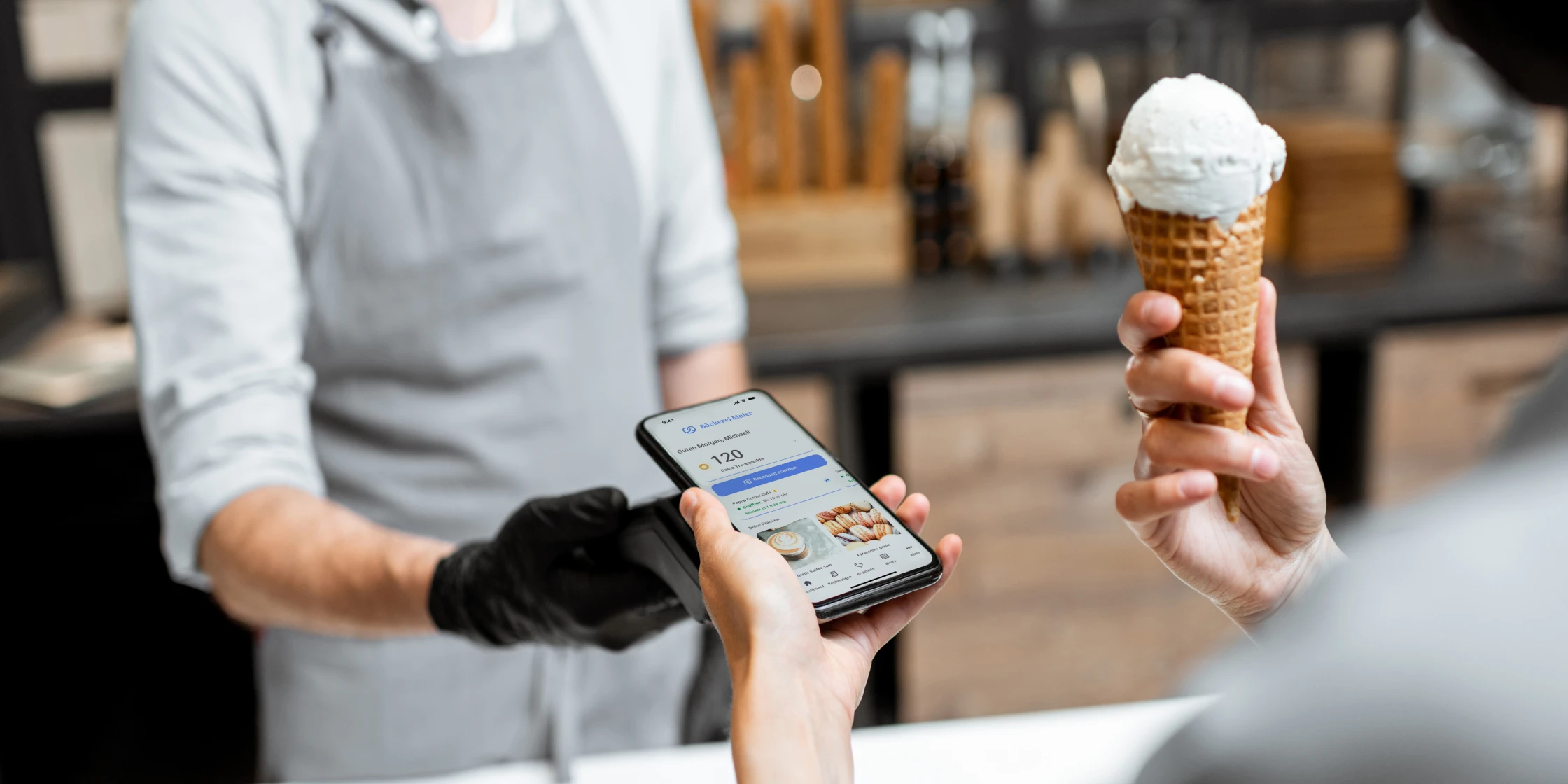
Discounts create momentum. They attract attention, increase footfall and can quickly turn a “Maybe I’ll have a look” into a “I’ll take it.” For retailers, they are an important tool. But as a standalone strategy, they rarely go far enough.
Because the real question is not: How do we sell something cheaper today?
The real question is: How do we get customers to come back again and again?
Digital customer loyalty starts where classic discount campaigns often stop. It turns individual buying impulses into an ongoing relationship. Customers collect points, receive relevant offers, redeem benefits and are activated at the right moment. For retailers, this creates a direct channel for repeat purchases, customer retention and new customer acquisition.
This is especially relevant for SMEs and mid-sized retailers in Europe. Customers already expect benefits to be available on their smartphones. At the same time, it is difficult to convince people to download yet another standalone app. The smart solution: mobile-pocket combines digital customer loyalty with existing reach. Retailers become visible where users already manage customer cards, offers and benefits.
What Is Loyalty Software for Retailers?
Loyalty software is a digital customer loyalty system for retailers. It combines customer cards, benefit logic, offers, communication and reporting in one solution. This allows companies to activate customers digitally, encourage repeat visits and better understand which measures actually work.
So it is not just about bringing a customer card to the smartphone. Good loyalty software helps answer concrete marketing questions: Who has just signed up? Who has not visited the store for a while? Which users are interested in a specific offer? Which measure leads to clicks, redemptions or repeat visits?
This makes customer loyalty more manageable. Not as a huge IT project, but as a marketing channel that connects the store, the smartphone and offer communication.
Why Discounts Alone Are Not Enough
Price promotions have their place. They work well for openings, seasonal products, strong campaign weeks or first purchase incentives. It becomes more difficult when discounting turns into a loop. Then people often buy because of the price reduction, not because of their relationship with the store. At the same time, discounts often benefit customers who would have bought anyway.
A good customer loyalty system creates a different kind of incentive. It does not only reward a single purchase, but encourages behaviour over time: coming back, collecting, redeeming, discovering more. Discounts can still play an important role. But they become part of a broader logic, not the only answer to every sales question.
Current market data shows that loyalty apps have long become part of everyday shopping behaviour. According to IFH Köln, 91 percent of surveyed consumers use at least one loyalty app. On average, consumers use 4.2 loyalty apps. But this also shows that usage alone does not equal true loyalty. Retailers need to stay relevant, otherwise the better offer will still win in the end. (1)
Why Existing Reach Makes a Difference
Many digital customer loyalty initiatives start with the same challenge: the technical solution is there, but active usage still needs to be built. A standalone app has to be promoted, downloaded, understood and opened regularly. For large brands, this can work. For SMEs and mid-sized retailers, it often requires a considerable amount of effort.
This is where mobile-pocket offers a clear advantage: retailers do not start from zero. They become visible in an app that is already used for customer cards, benefits and offers. In Austria, mobile-pocket reaches around 1.5 million active users. (5) This makes mobile-pocket not only a digital customer card solution, but also a reach channel for retail.
The value lies in the combination. Retailers can digitally activate existing customers and also reach new mobile-pocket users. In other words: not only customer retention, but also new customer acquisition.
This is particularly interesting when launching a new digital customer card or a new benefit offer. Once customers sign up, the card is available immediately. No waiting for a plastic card, no postal delivery, no media break. Less printing and shipping also contributes to more sustainable processes.
How New Customer Acquisition Works With mobile-pocket
New customer acquisition via mobile-pocket starts with an offer that is easy to understand. What should make people want to discover your store, your digital customer card or your benefit?
This could be a welcome benefit, a limited-time offer, a regional campaign or a benefit for a defined target group. Distribution can take place through mobile-pocket channels such as placements in “My Offers”, push notifications to defined target groups or location-based messages to users near selected store locations. Optional reach boosts can provide additional visibility.
Clarity is essential. On a smartphone, there is little time for long explanations. A good offer immediately answers four questions: What do I get? Where do I get it? How do I redeem it? Why is it worth acting now?
mobile-pocket supports companies with the setup, campaign logic, design, distribution and reporting. If internal resources are limited, the campaign does not have to sit entirely with the marketing team.
Still, digital customer loyalty works best when it is also visible on site. QR codes in the store, checkout displays, stickers, posters, newsletters, the website and social media all help make the benefit offer known. The better retailers promote their digital customer card themselves, the faster usage, reach and activation grow.
Which Features Good Loyalty Software Should Offer
For retailers, the longest feature list is not what matters most. What matters is everyday impact. A good customer loyalty system should be easy to start, activate customers, make offers visible and make results measurable.
A useful starting point is a digital customer card with a clear collection logic. Customers scan a QR code in the store, download the app, scan their receipt after purchase and automatically collect points. Rewards or benefits can then be redeemed directly in the app.
From there, communication becomes important. New members can receive a welcome message. Customers who have not purchased for a while can receive a relevant impulse. Users who are close to reaching a reward can be reminded. This creates customer loyalty at the right moment.
For retailers with several locations, additional functions become more relevant: customer segmentation, an offer channel, push notifications, a store finder with opening hours, campaign reporting and additional visibility within mobile-pocket. For larger brands or branch networks, a dedicated branded app can also make sense.
For SMEs, the essential package is particularly interesting: entry into digital customer loyalty starts at € 35 per month and includes the basics for a digital customer card, receipt scanning, points, rewards and simple customer activation. plus expands the focus to customer communication, segmentation and visibility. brand is designed for companies that want their own branded app. Reach boosts can be booked optionally depending on requirements.
Which setup fits best depends on the company’s starting point. Is the main goal to increase repeat visits? Generate more sign-ups? Improve visibility at the store location? Reduce plastic cards? Or communicate offers in a more targeted way than before? For some companies, a lean start with a digital customer card, receipt scanning, points and rewards is enough. Others want to add offers, push notifications, targeted customer communication and reporting.
What matters most is a clear benefit for customers. Collecting points is good. A reward that feels achievable is better. A benefit that arrives at the right time is even stronger.
Measurability is also essential. Relevant KPIs include card sign-ups, active users, offer clicks, point and reward redemptions, repeat visits, campaign performance and the development of customer loyalty over time. McKinsey describes the connection between loyalty, pricing and personalisation as an important growth lever: companies should not simply push more campaigns, but offer customers clear value at the most relevant moment possible. (3)
Data Privacy and Trust Are Part of the Equation
Digital customer loyalty depends on trust. Customers share data when the value is clear and when data handling feels professional. For retailers in Europe, this is essential: GDPR, transparency and IT security are part of the quality of a loyalty solution. mobile-pocket is ISO 27001 certified and demonstrates professional information security management. (4)
This is especially relevant for SMEs and mid-sized retailers. They can use digital customer loyalty without having to build a complex security and app infrastructure themselves.
Conclusion: Loyalty Does Not Just Sell Once. It Brings Customers Back.
Discounts can create attention, strengthen promotions and trigger a first purchase. But sustainable customer loyalty is not built on the lowest price alone. Loyalty software helps retailers reach customers more effectively, encourage repeat visits and communicate offers in a more targeted way. With mobile-pocket, there is an additional advantage: existing reach. Retailers do not only speak to known customers, but also reach new mobile-pocket users who are already open to customer cards, offers and benefits.
For SMEs and mid-sized retailers, this is a pragmatic and smart way to implement digital customer loyalty professionally without having to build everything themselves: from a simple start with essential to additional communication and visibility with plus, all the way to a branded app with brand. Optional reach boosts can additionally help make offers and new digital customer cards visible faster.
Sources and Further Reading
(1) IFH Köln / IFH MEDIA ANALYTICS and MEDIA CENTRAL: “Hohe Nutzung, begrenzte Loyalität: Wo Loyalty Apps an ihre Grenzen stoßen”, 2026. The study shows, among other things, that 91 percent of surveyed consumers use at least one loyalty app and that consumers use an average of 4.2 loyalty apps.
(2) IFH Köln / IFH MEDIA ANALYTICS and MEDIA CENTRAL: “Verbreitung und Nutzung von Loyalty-Apps”, 2025. The study shows, among other things, that 70 percent of consumers actively use loyalty apps.
(3) McKinsey & Company: “Members only: Delivering greater value through loyalty and pricing”. The article describes how companies can create additional customer value and growth by connecting loyalty, pricing and personalisation.
(4) EY: “2026 EY Loyalty Market Study”. The study describes how loyalty programmes perform according to traditional metrics, while customers increasingly evaluate value, experience and simplicity differently.
(5) mobile-pocket: Company information and ISO 27001 certification.
mobile-pocket platform figure, internally approved, 2026: around 1.5 million active users in Austria.
Ready for customer loyalty that actually makes a difference?
If you would like to find out where your company currently stands and which measure truly supports new customer acquisition and customer retention, let’s talk. Together, we will look at which package and which next step sustainably fit your business.


Let’s find the right package for you
FAQ
Classic discount campaigns reduce the price of a single purchase. Loyalty software creates additional incentives for repeat visits, further purchases and longer customer relationships. Discounts can be part of this, but they are not the only focus.
mobile-pocket reaches users who already manage customer cards, benefits and offers in the app. Retailers can use placements in “My Offers”, push notifications, target group pushes, geofence pushes and optionally bookable reach boosts to draw new people’s attention to their store or digital customer card.
mobile-pocket is particularly useful when retailers want to combine store footfall, repeat visits, digital customer cards, offers and the existing mobile-pocket reach. This is relevant for SMEs, mid-sized retailers and companies with several physical locations.
Discounts remain useful when they are used in a targeted way. In a good loyalty strategy, however, they are only one building block. Points, rewards, exclusive benefits, personal messages and relevant offers help activate customers not only once, but over the long term.
mobile-pocket can be an alternative to hello again for retailers looking for a loyalty solution with existing app reach, digital customer cards, offer communication and an optional branded app. Which mobile-pocket solution fits best depends on company size, goals, technical starting point and desired reach.